With the Mayor of Pamplona, Ernest Hemingway’s grandson, Orson Welles’s daughter, the only English bullfighter and the finest American and Spanish bull-runners… there is simply no other guide to Pamplona written in English.
The world’s most dangerous event unfolds at the heart of its biggest party. Each morning at 8am, from July 7th to July 14th, a herd of fighting bulls is driven through the streets of Pamplona for the Feria of San Fermín, the Spanish fiesta that draws more than a million visitors every year. This is your guide to surviving — and savouring — Fiesta, both during the encierro (the ‘bull-run’) and beyond it, with advice on what to do in the city for the other 358 days of the year.
Featuring a foreword by the Mayor of Pamplona, this is the only official guide to the city in English. It also includes contributions from John Hemingway, grandson of Nobel Prize-winning author Ernest Hemingway — the man who made Pamplona world-famous — and a memoir by Beatrice Welles recalling her first visit there with her father, Orson Welles, producer, director, writer and star of the greatest film ever made, ‘Citizen Kane’. There are chapters on how to run and why to run by Joe Distler, the greatest American runner ever, plus photographs by veteran EPA photographer Jim Hollander drawn from his half-century of experience in Pamplona.
The book is co-authored and edited by the award-winning English author and travel writer — and former bullfighter — Alexander Fiske-Harrison, whose book Into The Arena: The World Of The Spanish Bullfight was a finalist for the William Hill Sports Book Of The Year 2011, the world’s oldest — and richest — sports-writing prize.
It also offers advice pages from the very finest Spanish and Basque runners — Julen Madina Ayerbe, Miguel Angel Eguiluz Lopez, Jokin Zuasti Urbano and Josechu Lopez Jimeno — who share over 10,000 runs between them… there simply is no other guide book.
Inside you’ll find links to the most important bull-running videos, hotel and travel information and booking sites, a Spanish phrasebook and details of other, smaller bull-runs across Europe. It also features additional photographs by award-winning Spanish photographers Nicolás Haro and Carlos Cazalis.
Out now on Amazon (US) - click here - for Amazon UK, click here, for Amazon Australia, click here, for Amazon Canada, click here and similarly for Spain, France, Germany, Netherlands, Mexico, Brazil, Italy, Japan, India…
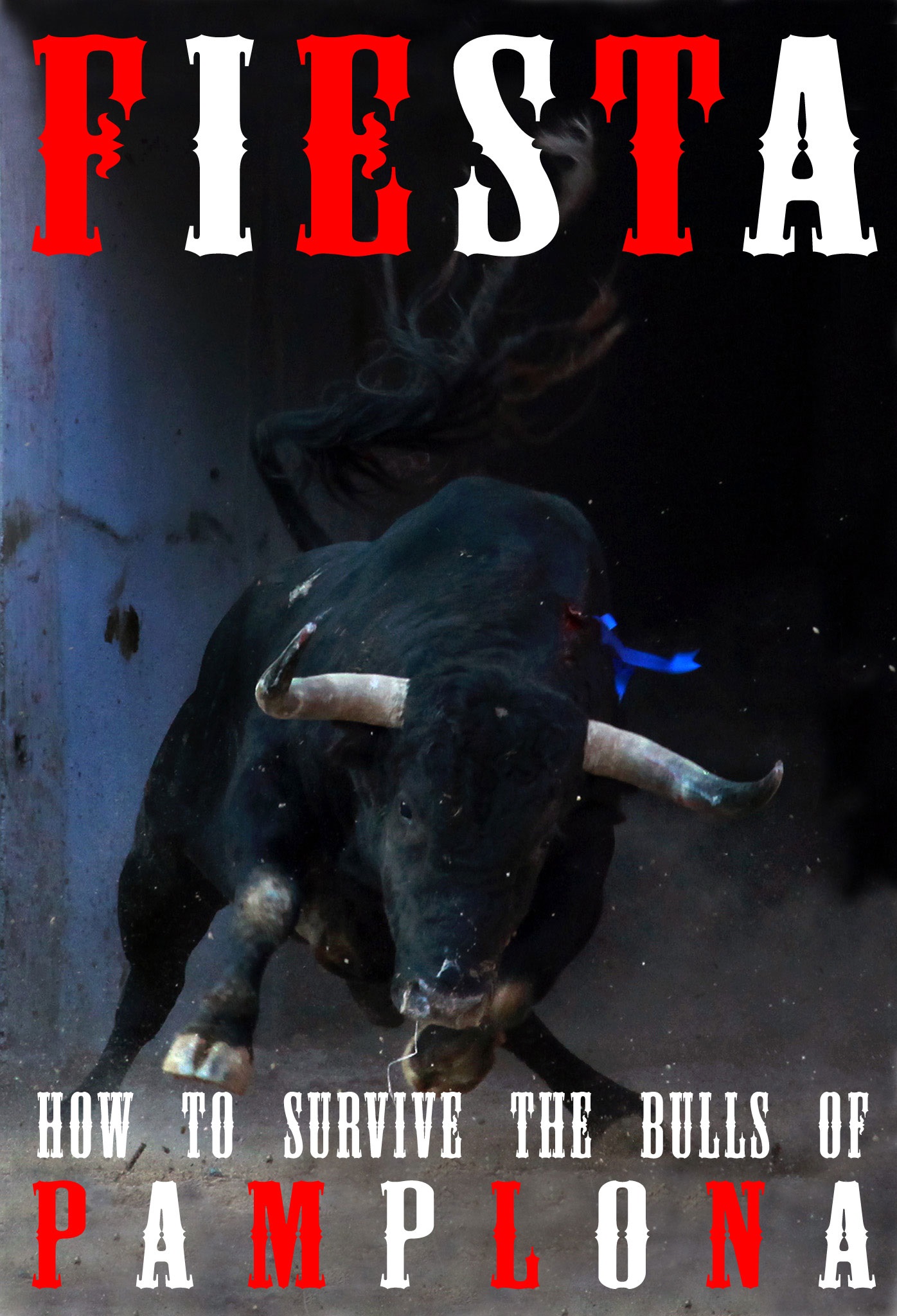
FIESTA
How To Survive The Bulls Of Pamplona
by
Alexander Fiske-Harrison
With contributions by John Hemingway
Joe Distler
& photography by Jim Hollander
With a Foreword from the Mayor of Pamplona
And a brief memoir from Beatrice Welles, on her father Orson
THIRD EDITION
MEPHISTO PRESS 2016
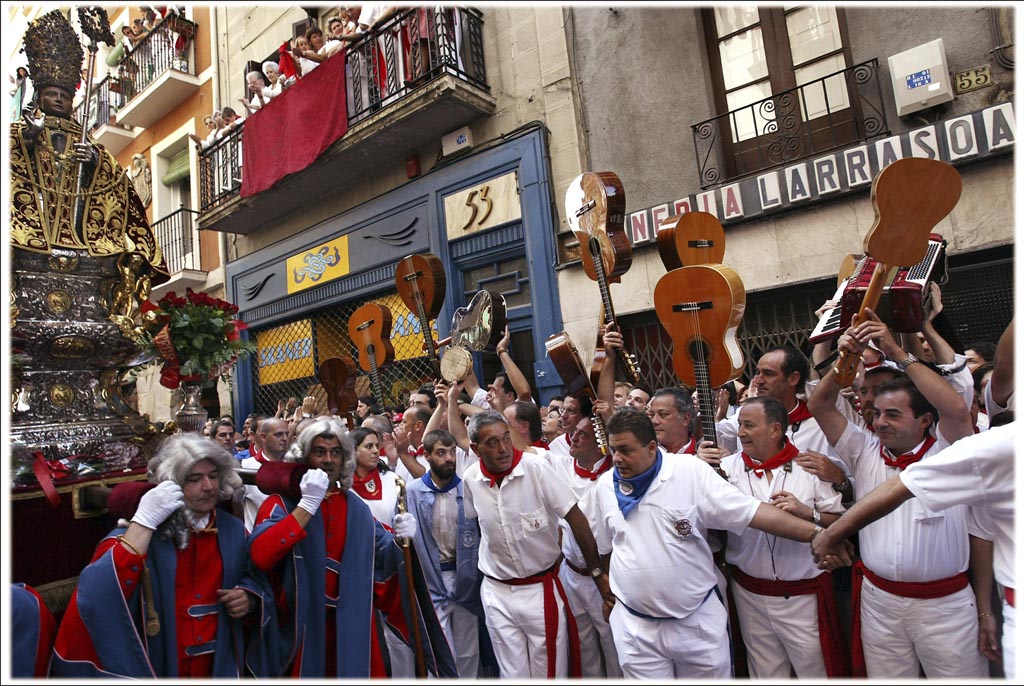
Nothing like it on Earth: San Fermín is carried into the streets (Jim Hollander)
Introduction by Alexander Fiske-Harrison, Editor
Sitting in the Plaza del Castillo, Pamplona’s main square, in April, you would never guess what will happen to the town three months later. Yet at these same tables at Café Iruña ninety years ago, Ernest Hemingway watched it unfold and captured it better than anyone:
“At noon of Sunday July 6th the festival exploded, there is no other way to describe it.”
Every July a million people pour into Navarre’s capital for the feria of San Fermín — a city whose usual population is under 200,000.
The world has many great festivals — the samba-pulsed abandon of Rio’s Carnival, the beer-soaked Bavarianism of Munich’s Oktoberfest, the jazz-tinged saunter of New Orleans’ Mardi Gras — but only one begins each day with a stampeding herd of Spanish fighting bulls charging down its main streets, accompanied by — or sometimes carried impaled on their horns — the very brave, the very foolish, the very drunk and, alongside them, the very few who know what they are doing for one simple reason: they do it time and time again.
Spain holds thousands of ferias every year and many involve bulls, but there is only one Feria del Toro — the ‘Fair of the Bull’ — and that is San Fermín in Pamplona. The largest bulls in the country are brought here and, in an age-old tradition, released from their corrals at 8am each day from July 7th to July 14th to the sound of a rocket.
Over a mere half mile from those corrals — some 800 metres, sometimes covered by the cattle in under two minutes, sometimes terrifyingly, agonisingly longer if they split up and turn as dangerous as only a suelto, a ‘loose’ bull, can be — this city defines itself.
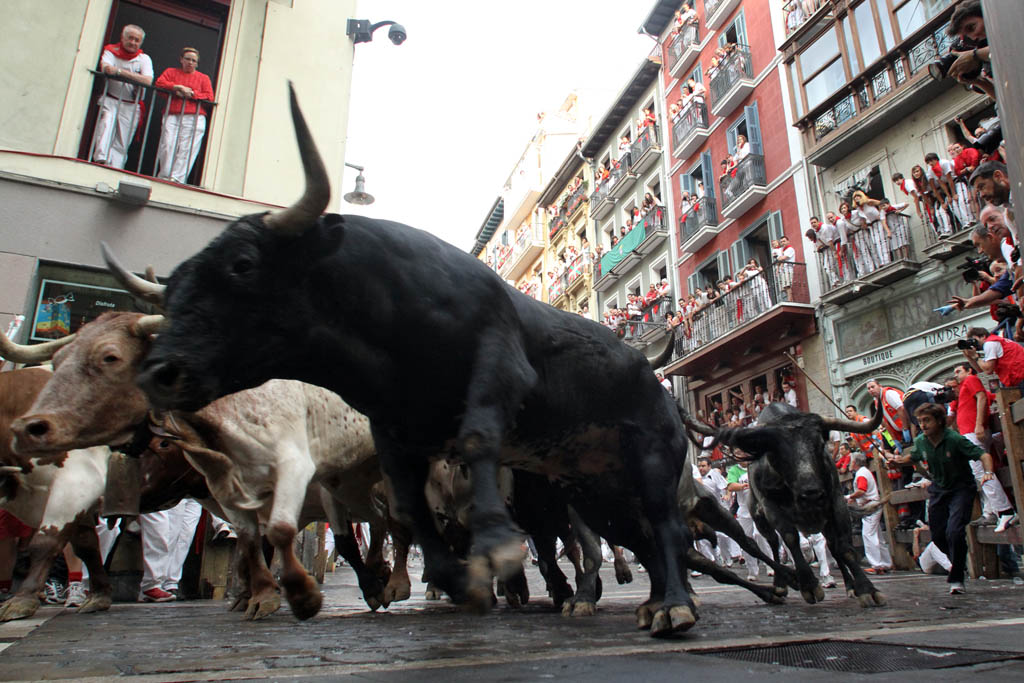
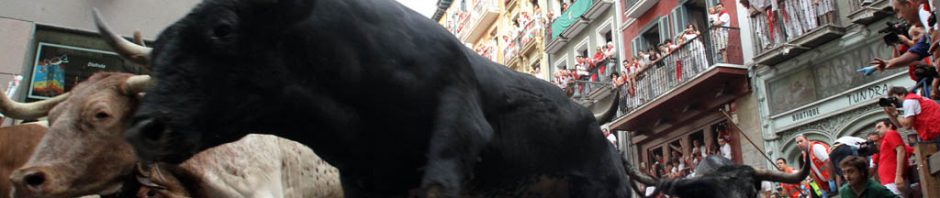
The bulls crest the curve of calle Estafeta (Photo: Jim Hollander)
When I first arrived in Pamplona in 2009, I was writing a book on el mundo de los toros, ‘the world of the bulls’ in Spain, and had already been in the ring with two-year-old animals — small, quarter-ton beasts used by bullfighters for training. After that, a great professional matador named Juan José Padilla promised to teach me how to run.
He pulled out, though (in fairness to the now famously one-eyed Padilla, he had been gored in a bullfight a few days earlier), and I arrived alone without the faintest idea what to do. At the time there was not a single guide book telling me what to expect or how to survive. Hemingway, who never ran the bulls himself, set his first novel here, The Sun Also Rises (published as Fiesta in the UK), and went on to write two non-fiction books on bullfighting, Death In The Afternoon and The Dangerous Summer. They are about as useful to a bull-runner as a violin in a gunfight. I’ve included the chapter from that book, Into The Arena: The World Of The Spanish Bullfight, to show you what happens if that is the extent of your preparation for Pamplona.
And that came after two years of researching bullfighting and training with matadors in the ring. What chance does everyone else stand? You may think I’m exaggerating, but bear in mind that fifteen people died in Spain’s bull-runs in 2015. This is deadly serious.
The thought of how unprepared people in Pamplona were ran through my mind many times, even as I ran bulls again and again and fought ever larger ones, up to six years old and two-thirds of a ton. (If that troubles your ethics: wait. There’s more on that to come, and not all of it pro-bullfighting. There’s no propaganda here.)
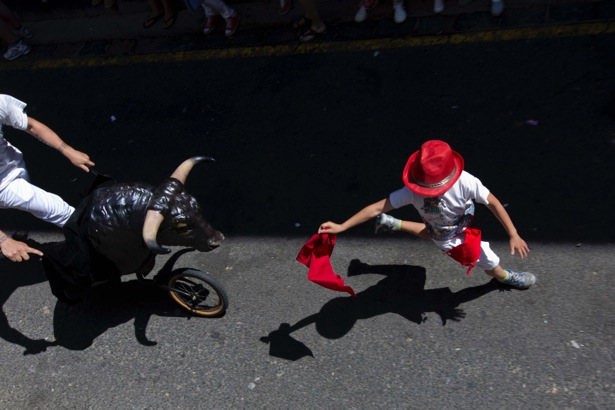
In training from an early age (Photo: Jim Hollander)
I am a British writer who has run bulls and fought bulls — I’ve even taught Russian oligarchs how to fight bulls — written books on bulls and spoken about them for everyone from The Times in the UK to The New York Times in the USA to The Hindustan Times in India, and from the BBC to CNN to Al-Jazeera.
I served as Bear Grylls’ ‘Extreme Survival’ expert on bulls for the Discovery Channel. I write the bullfighting blog The Last Arena and edit The Pamplona Post. You can even find me discussing bulls in Spanish in ¡Hola! magazine and in French in ‘Les Invincibles’, a finalist for Le Prix Hemingway 2016. Last year I even did the commentary for NBC in the US, which was practically another language as well.

Me, centre, doing commentary immediately after the run (hence the sheen of sweat) Photo courtesy of NBC-Universal
John Hemingway is, like his grandfather Ernest, an author (his books include Strange Tribe: A Family Memoir). Hemingway senior may have ‘discovered’ Pamplona for the English-speaking world ninety years ago, but John remains the only member of the family ever to have run with the bulls.
Joe Distler is not only a New York lecturer in English literature but the greatest non-Spanish bull-runner of all time and the only person to have run every encierro in Pamplona (eight each San Fermín) from 1967 to 2012 — 376 runs in Pamplona alone.
Jim Hollander came here to run before any of us, in 1962, though he gave up running after a fatally grim year in ’77, which he describes below. He has photographed every encierro since, taking time off from his day job photographing everything from Middle East warzones to the London Olympics for the European Pressphoto Agency (EPA), to whom we owe a great debt of thanks for letting us republish so many of Jim’s photos from their back catalogue. Jim also wrote the photographic book Run To The Sun: Pamplona’s Fiesta de San Fermín.
I have also translated advice from four of the most renowned bull-runners in all of Spain — with over ten thousand encierros of experience between them — because none of the English writing I have read on the subject ever asked these men what they think or represented their views and their hard — indeed bloodily — earned wisdom. So we four Anglo-Saxon runners (as the Spanish call us) are balanced by Julen Madina from San Sebastián, Miguel Ángel Eguiluz from Pamplona, Jokin Zuasti from Pamplona and Josechu Lopez from Cuéllar.
There are also pictures by two award-winning photographers from the world of the bulls: Nicolás Haro of Seville, winner of PhotoEspaña 2013, whose family bred the bulls of Marqués de Malpica until the old Marqués, his grandfather, sold the herd; and Carlos Cazalis, winner of World Press Photo 2010, whose grandfather was the famous Mexican matador Alfonso Ramírez “El Calesero”.
Another American was often seen in Pamplona: Orson Welles, the titan of cinema who produced, wrote, directed and starred in perhaps the greatest film ever made, Citizen Kane. I have included his daughter Beatrice’s account of the first time she came here with her father.
My own closing words of advice are simple: if you want to guarantee you survive running the bulls, stay off the street and watch from a balcony. There is far more to Spain’s ultimate fiesta, ‘feast’, than defying your own fear of death or proving to everyone else that you have none. If that is your aim, then, in the words of our friend Larry Belcher — Texan rodeo champion turned bull-runner — “strap on your back-pack and get the hell out of Dodge.”
So come to Pamplona, raise a glass, dance a step, meet someone you’ll love, lose someone who didn’t love you — but whatever you do, never take the moments after the 8am rocket any less seriously than you would your own funeral.
Alexander Fiske-Harrison
Pamplona, Easter, 2014 (updated 2016)
Out now on Amazon (US) - click here - for Amazon UK, click here, for Amazon Australia, click here, for Amazon Canada, click here and similarly for Spain, France, Germany, Netherlands, Mexico, Brazil, Italy, China, Japan, India…
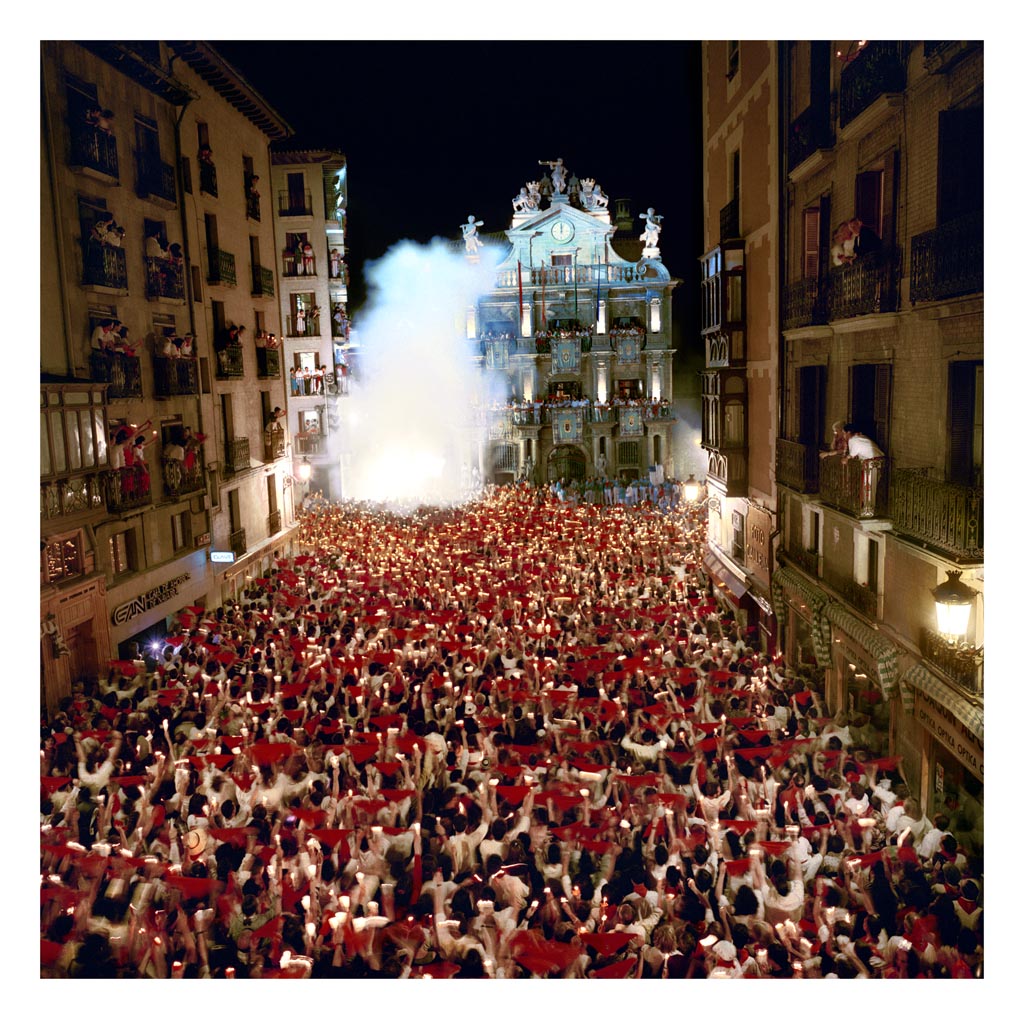
The saddest day - the pobre de mí, ‘poor me’ – at the Ayuntiamento which marks the end of Fiesta at midnight on July 14th (Photo: Jim Hollander)
Out now on Amazon (US) - click here - for Amazon UK, click here, for Amazon Australia, click here, for Amazon Canada, click here and similarly for Spain, France, Germany, Netherlands, Mexico, Brazil, Italy, Japan, India…
Frequently Asked Questions
When does the Running of the Bulls take place?
According to the guide, the encierro takes place every morning at 8am from July 7th to July 14th, during Pamplona's Feria of San Fermín.
What is Fiesta: How To Survive The Bulls Of Pamplona?
It is described on this page as the only official guide to Pamplona in the English language, with a foreword from the Mayor of Pamplona and contributions from John Hemingway, Joe Distler, Beatrice Welles and others, co-authored and edited by Alexander Fiske-Harrison.
Who contributed to the book?
The page lists contributions by John Hemingway, Joe Distler, Beatrice Welles, Jim Hollander, Julen Madina Ayerbe, Miguel Angel Eguiluz Lopez, Jokin Zuasti Urbano, Josechu Lopez Jimeno, Nicolás Haro and Carlos Cazalis, among others.
Where can I buy the book?
The page provides Amazon links for the US, UK, Australia, Canada, Spain, France, Germany, the Netherlands, Mexico, Brazil, Italy, Japan and India.
Is running with the bulls dangerous?
Yes. The guide states that fifteen people died in the bull-runs of Spain in 2015, and the editor's advice is that if you want to guarantee you'll survive, stay off the street and watch from a balcony.

