Pamplona, San Fermín and the Running of the Bulls
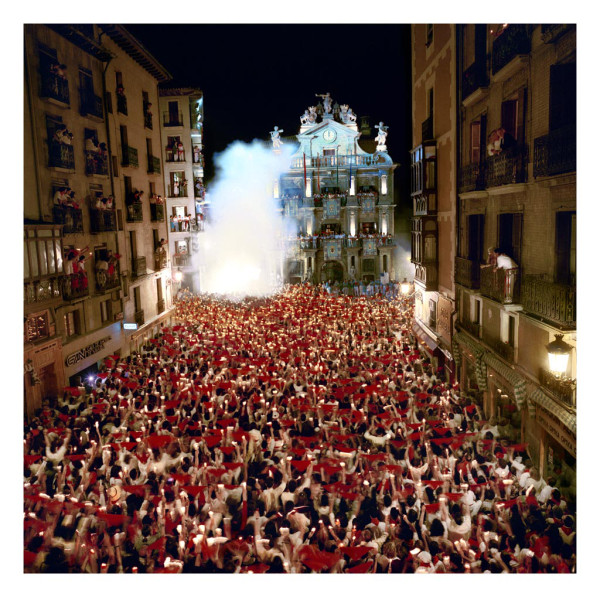
Spend an April afternoon on the Plaza del Castillo, Pamplona's central square, and it is hard to picture how this quiet city transforms three months later. Yet at these very café tables at Café Iruña, ninety years ago, Ernest Hemingway watched the fiesta unfold and captured it unforgettably: at noon on Sunday July 6th, he wrote, the festival simply exploded.
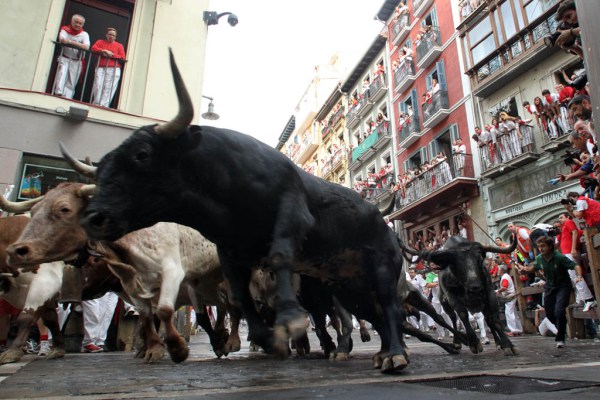
Every July around a million visitors pour into Navarre's capital for the feria of San Fermín — a city whose usual population is under 200,000. The world has many great festivals, from Rio's Carnival to Munich's Oktoberfest to New Orleans' Mardi Gras, but only one opens each day with a stampeding herd of Spanish fighting bulls charging through its main streets, alongside — or sometimes carrying on their horns — the very brave, the very foolish, the very drunk, and the few who truly know what they are doing because they return again and again.
Spain hosts hundreds of ferias with bulls each year, but there is only one Feria del Toro: San Fermín in Pamplona. The country's largest bulls are brought here, and in an age-old ritual, from July 7th to July 14th they are released from their corrals at 8 a.m. and driven along a fenced route up the steep calle Santo Domingo, across the Plaza de Ayuntamiento, along calle de los Mercaderes, around the hard right-angle known as la curva, down calle Estafeta, past the gentler bend called teléfonos, into the bullring's entry tunnel across the callejón, and onto the sand, where capemen — many former bullfighters — draw their attention and guide them safely into the ring's corrals.
In barely half a mile — some 800 metres, sometimes covered by the cattle in under two minutes, sometimes terrifyingly longer if they split off and become as dangerous as only a suelto, a loose bull, can be — this city defines itself.

Learning to Run: A First-Timer's Story
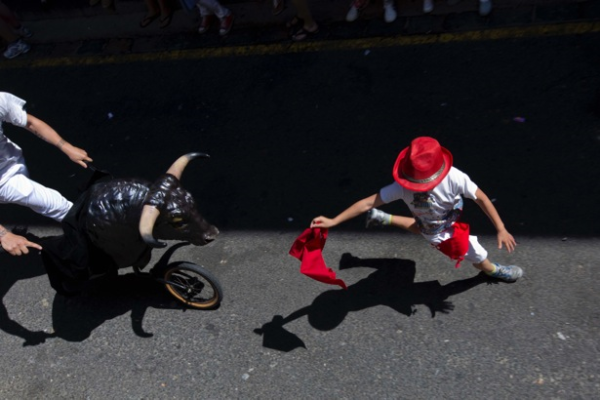
When the editor first arrived in Pamplona in 2009, he was researching a larger book on Spain's world of bulls and had already stood in the ring with two-year-old animals — small, quarter-ton beasts used for training by bullfighters. A celebrated matador, Juan José Padilla, promised to teach him how to run, but had to withdraw after being gored in a bullfight days earlier. So he arrived alone, with no idea what to expect — and at the time not a single guidebook explained how to survive it.
Hemingway, who never ran the bulls himself, set his first, strikingly beautiful novel here — The Sun Also Rises, published in the UK as Fiesta — and wrote two fine non-fiction books on the bulls, Death In The Afternoon and The Dangerous Summer. All three were read, but, literary respect aside, they proved about as useful as a violin in a gunfight. So he took an afternoon train from Barcelona, checked into a hotel near the entry to the encierro, completed his 'uniform' of white shirt, trousers and trainers with a red sash and neckerchief, and had a drink with an American friend, an amateur bullfighter from the New York City Club Taurino, who explained what lay ahead. The chapter of his book, Into The Arena: The World Of The Spanish Bullfight, tells what happened next.
So if you have never fought a bull and have no bullfighting friends, how are you meant to handle this madness and come out alive? That question has echoed many times, even as he ran bulls again and again and fought larger and larger animals, culminating in killing a three-year-old weighing a third of a ton. Those uneasy with the ethics should read on: there is more to come, and not all of it pro-bullfighting. There is no propaganda here.
This year a group came together — all the others knowing Pamplona far better than the editor — to produce this little book.
The Contributors
The editor is a British writer and broadcaster who has run bulls, fought bulls, written books on them and discussed them everywhere from The Times of London to The New York Times to The Hindustan Times in India, and from the BBC to CNN to Al-Jazeera. He authors the bullfighting blog The Last Arena and edits The Pamplona Post.
John Hemingway, like his grandfather Ernest, is an author, including of Strange Tribe: A Family Memoir. Hemingway senior may have 'discovered' Pamplona for the English-speaking world ninety years ago, but John remains the only member of the family ever to run with the bulls.
Joe Distler, a lecturer in English literature from New York, is the greatest non-Spanish bull-runner of all time and the only recorded person to run every encierro in Pamplona — eight each San Fermín — from 1967 to 2012: 368 runs in Pamplona alone. He also contributed a chapter on running in other towns in Appendix II.
Bill Hillmann is a Chicago Golden Gloves-winning boxer — Hemingway's old sport in Hemingway's old town — a Chicago Tribune journalist and author, and one of the most experienced young English-speaking bull-runners on the streets today.
Jim Hollander came to run before any of them, in 1962, and although he gave up running after a fatally grim year in '77, which he describes below, he has photographed every encierro since, taking time off from assignments everywhere from Middle East warzones to the London Olympics as senior photographer for the European Pressphoto Agency (EPA), to whom great thanks are owed for allowing so many of Jim's photos to be republished. He also authored the photographic book Run To The Sun: Pamplona's Fiesta de San Fermín.
Words of advice have also been translated from four of the most noted bull-runners of Pamplona and the rest of Spain — with over ten thousand encierros of experience between them — since none of the English writing on the subject has asked these men what they think or represented their views and hard, bloodily earned wisdom. So these four Anglo-Saxon writers, as the Spanish call them, are balanced by Julen Madina from San Sebastián, Miguel Ángel Eguiluz from Pamplona, Jokin Zuasti from Pamplona and Josechu Lopez from Cuéllar. And to counterbalance Jim Hollander, there are photos from Nicolás Haro of Seville, a frequent collaborator, photographer for Into The Arena, whose family, Fernández de Córdoba, once bred fighting bulls themselves.
One other great American was often seen in Pamplona: Orson Welles, the titan of cinema who produced, wrote, directed and starred in perhaps the greatest film ever made, Citizen Kane. Included is his daughter Beatrice's account to the editor of the first time she accompanied her father here. And to maintain the Anglo-Spanish balance, the book opens with a foreword from the Mayor of Pamplona.
Final Words of Advice
The editor's own closing advice is simple: if you want to guarantee you survive running the bulls, stay off the street and watch from a balcony. Spain's ultimate fiesta, its 'feast', offers far more than defying your fear of death or proving to everyone else that you have none. If that is your aim, then, in the words of our friend Larry Belcher — Texan rodeo champion turned bull-runner extraordinaire — 'strap on your back-pack and get t...'
- Into The Arena
- The Last Arena
- The Pamplona Post
- Joe Distler
- Jim Hollander Photography
- Run To The Sun Book
- Strange Tribe
- Fiesta (US)
- Fiesta (UK)
- Fiesta (AU)
- Fiesta (CA)
- Fiesta (ES)
- Fiesta (FR)
- Fiesta (MX)
- Out Now: The Ultimate Guide
- Encierro Photo
- Training Photo
- Fiesta Photo
- The Times
- The New York Times
- Hindustan Times
- BBC
- CNN
- Al-Jazeera
- Chicago Tribune
- Running with the Bulls
- WordPress.com
- Sidekick Theme
- Home
- Log Out
- 7del7
- Adolfo Suarez
- Alexander
- Amazon
- Andy Cooke
- Ayuntiamneto
- Beatrice Welles
- Bill Hillmann
- Book
- Buffalo Bill
- Bull
- Bull Fight
- Bull Fighter
- Bull Fighting
- Bull Run
- Bull Runner
- Bull Running
- Bullfight
- Bullfighter
- Bullfighting
- Bullrun
- Bullrunning
- Bullrunnner
- Bulls
- Bulls of Pamplona
- Buy
- Calle
- Callejon
- Cayetano
- Corredor