Alexander Fiske-Harrison: Writer, Bull-Runner and Conservationist
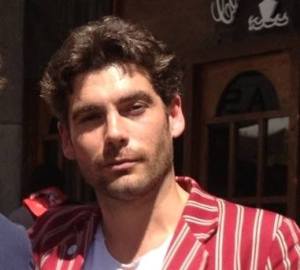
British author and journalist Alexander Fiske-Harrison has spent years documenting the world of the Spanish bulls. Raised in England, he relocated to Spain in his thirties and built a career that blends science, writing and firsthand experience in the arena.
His academic background includes large mammal zoology and animal behaviour at the University of Oxford, followed by postgraduate study of the foundations of biology and animal consciousness at the University of London. While researching his book, he trained as a bullfighter in Andalusia alongside matadors such as Juan José Padilla, Cayetano Rivera Ordóñez and Eduardo Dávila Miura.
His book Into The Arena: The World Of The Spanish Bullfight was shortlisted for the William Hill Sports Book Of The Year Award 2011, and his story of 1950s Paris and Pamplona, 'Les Invincibles', was shortlisted for The Hemingway Prize 2016 in France. In Spain he has spoken at the Foundation of Taurine Studies, at the University of Seville and for the Ambassador of Spain to the United Kingdom.
Writing and Broadcasting on the Bulls
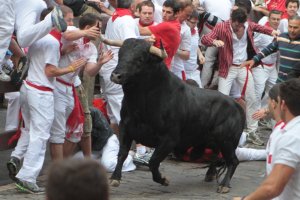
His work on the culture of the bulls has appeared in national and international outlets including The Times, The New York Times, Newsweek, GQ magazine, the BBC, CNN and the Discovery Channel. He first ran with the bulls in Pamplona in 2009 and, apart from 2010 when he was bullfighting in Andalusia, has taken part every year since in the encierros of San Fermín, as well as in runs in San Sebastián de los Reyes (Madrid), Cuéllar (Castile and León), Tafalla and Falces (Navarre).
El Toro Bravo: A Living Myth
When the dreams begin — the ones with black shadows and horns — the runners know the season is approaching. That taurine chatter fills restaurants, bars, letters, emails and social media groups all year, but the icy notes of anxiety creep into the voice as the spring sun rises. Deep in the unconscious, the Vernal Equinox stirs memories, fears and the ghosts of bulls we have run with and almost died with.
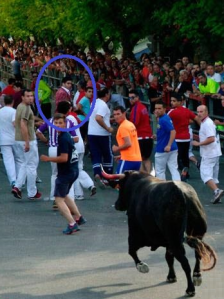
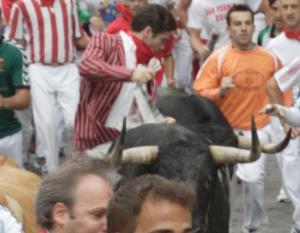
Every day spent running in Pamplona, the greatest and most famous encierro of them all, brings fears for oneself and fears for others. That is why this book exists. At each of those forty-odd San Fermín encierros (as of 2016), the author has been struck by how many newcomers seem to believe these animals are not dangerous, or even tame — otherwise how would the event be allowed? The answer, to paraphrase The Go-Between, is that Spain is a foreign country and they do things differently there.
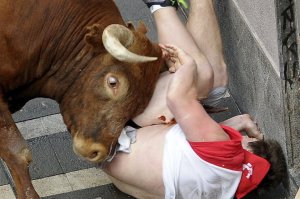
In his fourth encierro in Pamplona in 2011, he found himself wedged against the fence by a panicked press of bodies, unable to move as a four-year-old, 585kg Spanish fighting bull bore down on him. That day the bull, Empleado, from the notoriously dangerous Cebado Gago ranch, chose the man next to him instead; the man ended up in hospital while the author ended up in Bar Txoko, and it was the bull that decided who went where. That day made him as a bull-runner, and he has not run the same since.
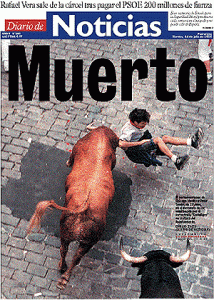
In 2015 in Cuéllar, the Old Castilian town that hosts the most ancient encierro in the world, he kept a healthy distance from a bull whose left horn was coated with the blood of a man he had just killed. On video the blow looks glancing — the bull runs past and nods its head as though bowing in respect — yet in a movement too fast for the human eye it punched its horn under the man's ribs and exploded his heart within his chest. In total, fifteen people died in bull-running events across Spain that year.
In an encierro the streets themselves become a plaza de toros. In days gone by the bull-run and the bullfight were almost indistinguishable: the encierro often ended in the town square, which was closed off with wagons or makeshift barricades, and a capea, or informal bullfight, would begin. In Pamplona, where emergency services are primed and medical expertise is that of a major city rather than a village, there have only been fifteen deaths since records began in the 1920s. Unless you know what you are doing — and especially what to do when things go wrong — you needlessly and massively increase your risk of leaving on a stretcher if you are lucky, and in a body-bag if you are not.
Fatalities and Risk in the Encierro
The first recorded death was Esteban Domeño Laborra, from Sangüesa (which also has an encierro), in 1924 — an account appears in The Sun Also Rises, as Hemingway was there that year. The most recent was Daniel Jimeno Romero, from Alcalá de Henares (which also has an encierro), in 2009 — an account appears in Into The Arena, as the author was there that year.
Between fifteen hundred and three thousand people run in each of the eight daily encierros, and with only two fatalities this century, the Pamplona fatality rate is around 1 in 150,000 runs. That is roughly the same as the fatality rate for jumping out of an aeroplane: according to the United States Parachute Association, out of 3.5 million jumps in 2015 there were 21 fatal accidents. There is one great difference, however: before their first parachute jump, people are invariably taught.
Explore More
- Editor's Introduction by Alexander Fiske-Harrison
- More by this author
- Encierro
- Bull-run
- Bull-running
- Bull-runner
- Bulls of Pamplona
- Ernest Hemingway
- Cuéllar
- Fiesta: How to Survive the Bulls of Pamplona
Share This Post

